
Reducing Onboarding Risk Through Usability Research
Role: UX Researcher (Usability Research Lead)
Responsibilities: Defined the research questions, selected usability testing as the primary method, authored the discussion guide, test set up on usertesting.com, synthesized findings, and translated insights into product and content recommendations for cross-functional partners.
Timeline: 1 week
Project Overview
Problem
Only ~40% of new members completed their profile information during onboarding, limiting demographic targeting, survey relevance, and downstream data quality.
Research Goal
Evaluate whether asking demographic and profile questions during onboarding aligns with user expectations, affects trust, and contributes to drop-off.
Primary Decision
Should profile questions remain required during onboarding, and how should they be framed to maximize completion without eroding trust?
Research Questions
What information do users expect to provide during sign-up?
How do users perceive the sensitivity and value of demographic questions during onboarding?
At what point does perceived friction or discomfort begin to emerge?
Does the flow meet expectations well enough to support completion?
Why This Study Was Relevant
Crowdtap’s business depends on accurate demographic data to power survey targeting and reduce repetitive questioning later in the experience. With only ~40% of new members completing their profiles during onboarding, the team faced a key risk:
Pushing too hard for information could erode trust and increase drop-off
Asking too little upfront could degrade data quality and survey relevance
This study focused on reducing onboarding risk by validating whether required profile questions aligned with user expectations and where friction or hesitation began to emerge.
Platform Context
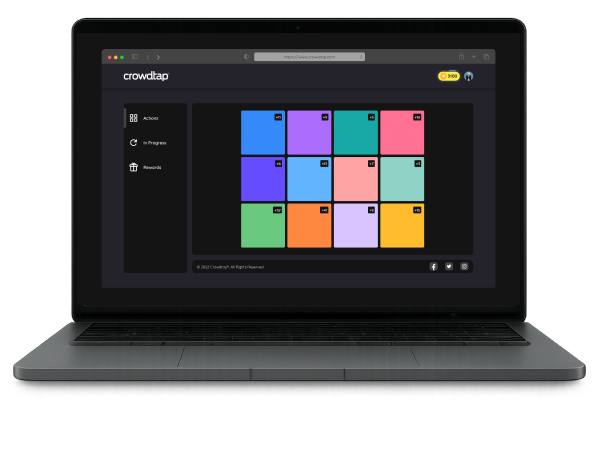
Crowdtap is a consumer research and rewards platform where members participate in brand surveys in exchange for points redeemable for gift cards. For Crowdtap, accurate profile data is critical: it powers demographic targeting, ensures survey relevance, and prevents members from repeatedly answering the same background questions within surveys.
Because onboarding is the first trust-building moment, the sign-up experience must balance business needs for data with users’ expectations around privacy, effort, and legitimacy.
Methodology
Method Chosen: Moderated usability testing
Why this method: Behavioral observation and real-time probing were required to understand trust, hesitation, and expectation setting — signals not reliably captured through analytics alone.
Platform: UserTesting
Participants: 10 participants (Crowdtap and non-Crowdtap members)
Inclusion Criteria:
Familiar or interested in survey/reward-based platforms
Excluded participants with no interest or familiarity to avoid skewed motivation
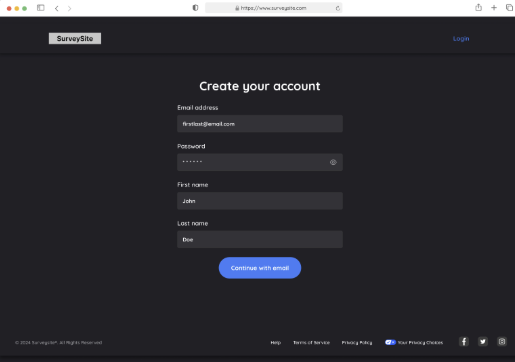
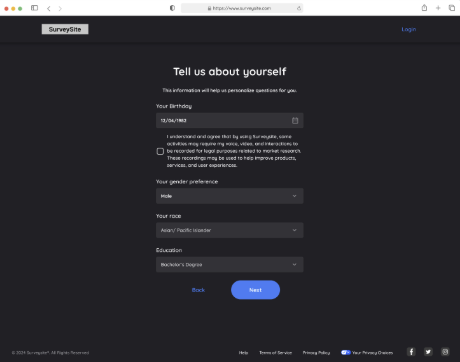
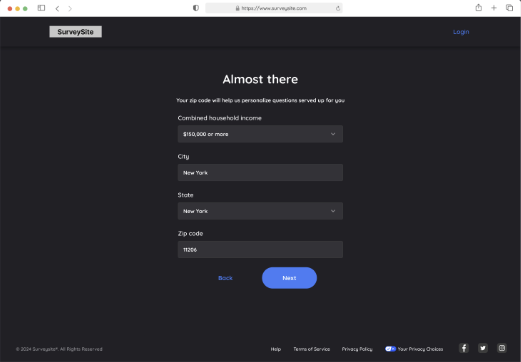
Prototype: Web onboarding flow with expanded profile questions
Limitations:
Small sample size
Prototype-based testing (no real account creation or incentives)
Study Design
Participants completed a step-by-step walkthrough of the onboarding flow, responding to structured prompts at each stage. Tasks focused on:
Expectations prior to sign-up
Perceived sensitivity of requested information
First impressions of each onboarding page
Understanding of why information was required
Likelihood to complete sign-up
Key Findings
Users understood the purpose, but comfort had clear limits
Users generally understood why demographic questions were being asked and linked them to survey targeting. However, comfort dropped as questions became more personal.
Insight: Understanding does not equal comfort. Transparency reduces friction, but boundaries still exist.
Friction Accumulated Gradually Across the Flow
No single question caused strong rejection. Instead, mild discomfort increased as users progressed through multiple demographic pages.
Insight: Drop-off risk is cumulative. Length and repetition matter more than any individual field.
Trust Was Strongly Influenced by Perceived Legitimacy
Users’ willingness to share information depended on how credible and familiar the platform felt. Security and verification steps reinforced legitimacy.
Insight: Trust signals can offset sensitive asks when they align with user expectations.
“I would be comfortable sharing information like my name, age, and race but beyond that, it becomes a little bit bothersome for me.”
Impact on Product Direction
Validated
Keeping demographic questions within onboarding
Collecting profile data upfront to avoid repeated survey questions later
Refinements Identified
Clarify why sensitive fields (income, household size) are required
Reinforce data usage and privacy cues at the point of asking
Avoid extending onboarding length further
Recommendations
Clarify Purpose at Point of Asking
Add concise, human-readable explanations beneath sensitive fields or via tooltips.
Reduce Perceived Length
Group demographic questions more intentionally to minimize repetition fatigue.
Increase Trust Signals Early
Surface privacy, security, and legitimacy cues earlier in the flow.
Preview Value
Introduce light visuals or examples of surveys to balance effort with perceived reward.
Outcome
The findings prompted Product Management to shift from validating whether demographic data should be collected during onboarding to exploring how and when profile information could be gathered more flexibly.
As a result, the design team was asked to explore alternative approaches to profile data collection that balance data quality with trust, timing, and perceived effort.
Researcher Reflection
This study reinforced that onboarding friction is rarely about a single question. It is about momentum, trust, and expectation-setting. Usability testing allowed us to separate understanding from comfort, enabling more confident product decisions without overcorrecting.