
AI Design Tools Aren’t Replacing UX. They’re Exposing What UX Actually Is
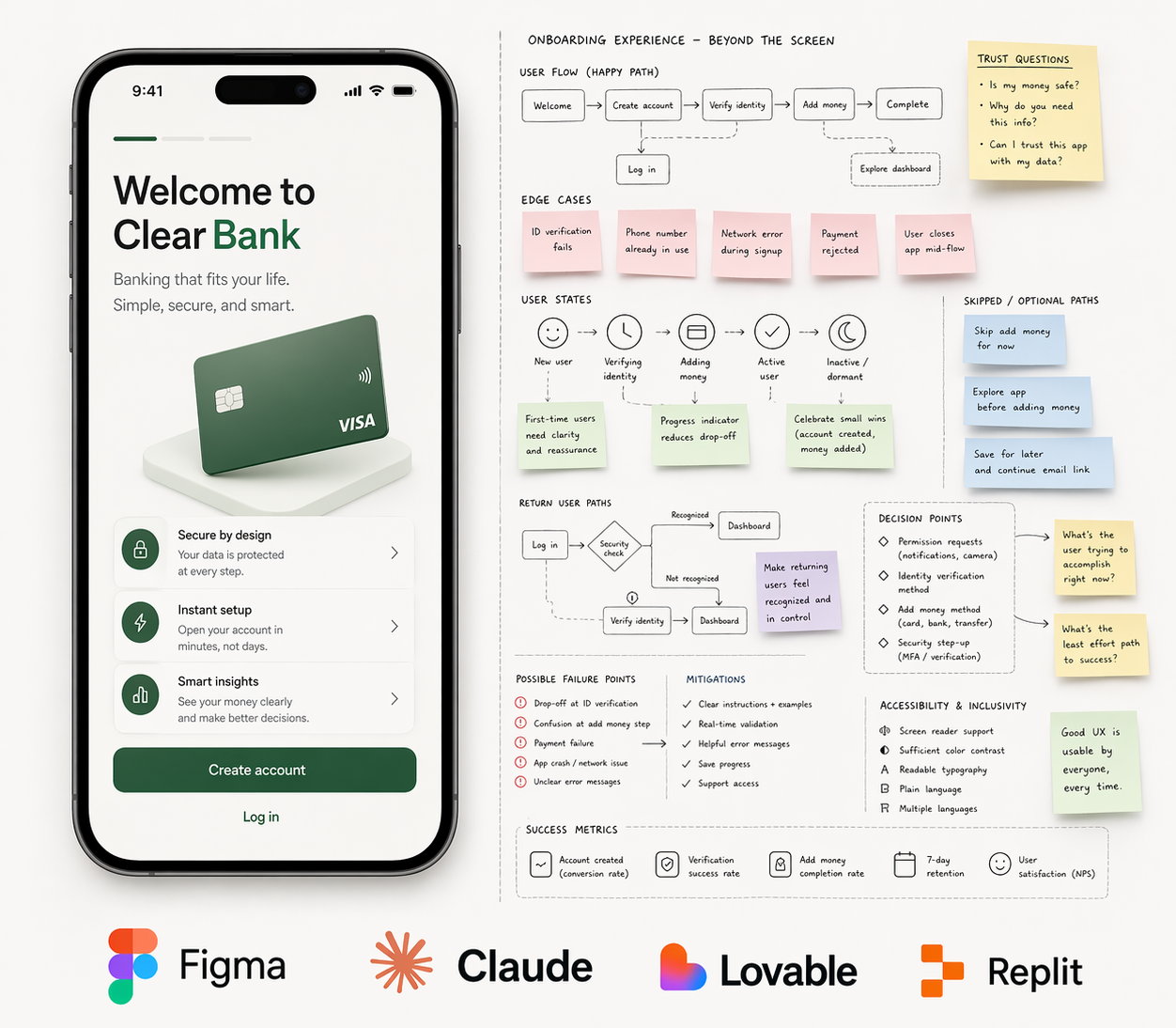
AI can already generate wireframes, polished screens, clickable prototypes, and outputs that feel close to a real product. That part is real. But what happens after vibe coding? The real work begins.
As output gets easier to generate, people start asking whether UX is losing value. I think the opposite is happening.
These tools aren’t removing UX. They’re revealing the difference between generating interfaces and designing an experience that actually works.
A lot of the visible layers of UX/UI work are getting compressed: wireframes, screens, components, variants, prototype passes, and cleanup. AI is getting much better at accelerating that layer.
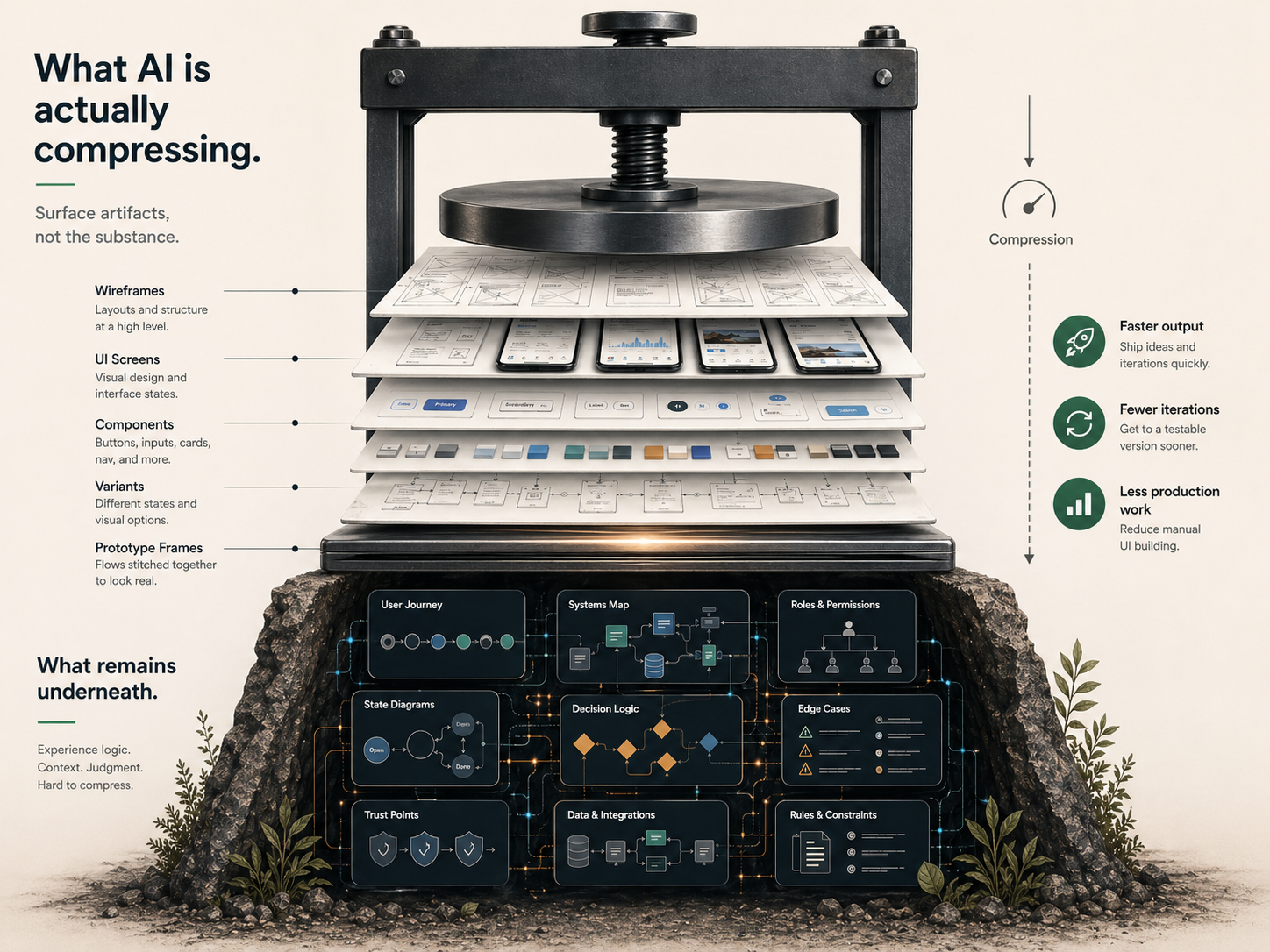
What it is still much weaker at is framing the right problem, understanding user needs in context, thinking through edge cases, making tradeoffs, building trust, and keeping an experience coherent from one step to the next.
That shift also changes role expectations. A lot of the work junior designers were often expected to do, like refining modules, assembling components, producing variations, and cleaning up flows, is exactly the kind of work these tools are starting to compress first. That doesn’t mean junior designers matter less, but it probably does mean the path into the field is changing.
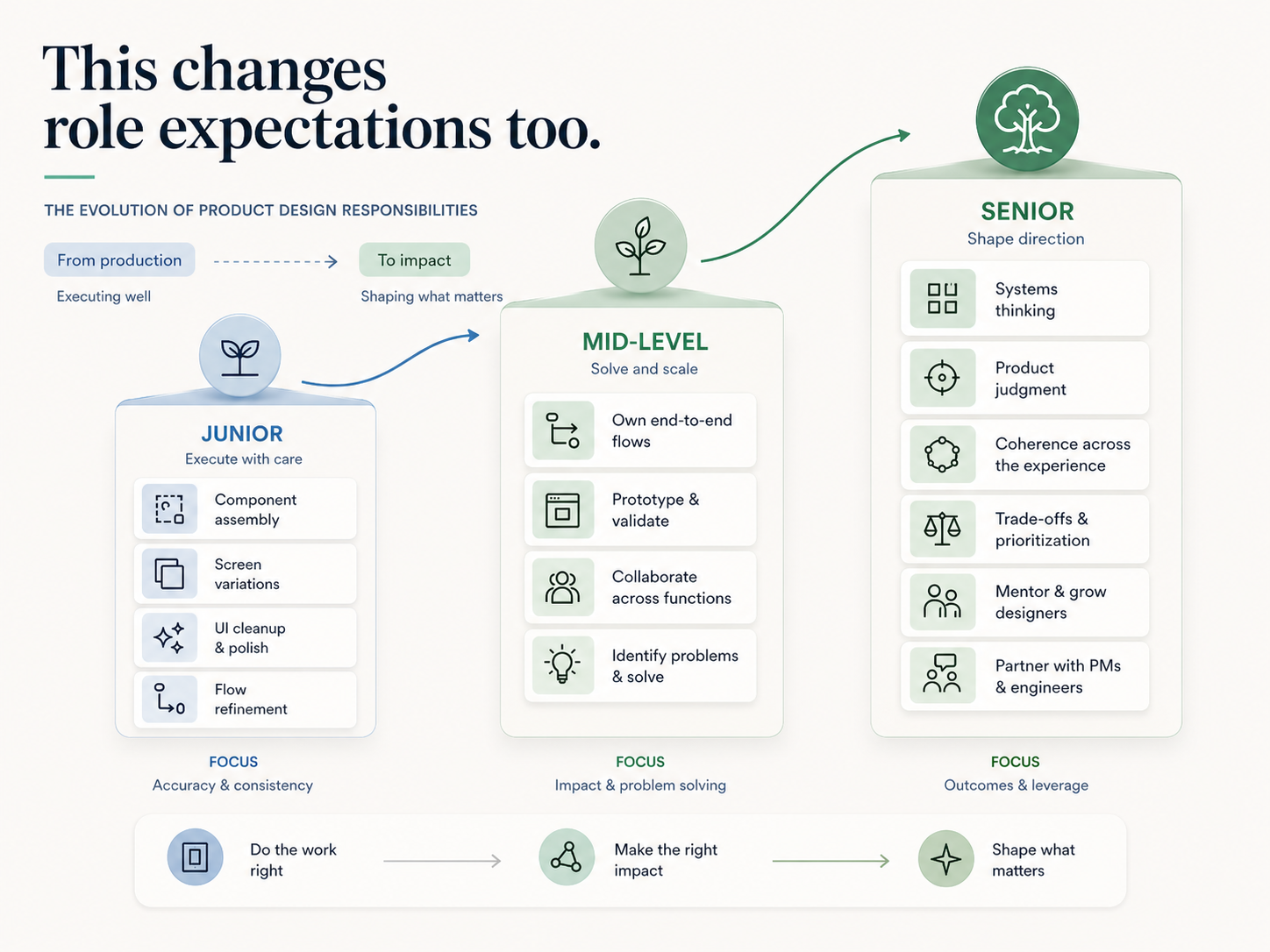
At the same time, senior designers may be pushed further toward judgment, systems thinking, and closer collaboration with PMs and engineers earlier in the process. That can be useful, but it also creates a new tension: more people can shape the idea, while someone still has to make sure the experience holds together.
A simple example is onboarding. AI can generate a polished flow fast, but polish isn’t the same as clarity. Does the user understand why they’re being asked for something, what happens if they skip it, or whether they trust the product enough to continue? That’s the difference between something that looks like a product and something that actually works like one.
So no, I don’t think AI is killing UX. I think it’s creating a separation moment: interface generation vs. experience design, production output vs. product thinking, speed vs. judgment.
If screens can be generated faster now, what exactly is the value you bring?
To me, the answer is still strong. The value is in framing the problem, understanding user needs beyond the obvious path, making decisions about flow, trust, hierarchy, accessibility, and tradeoffs, and knowing when something only looks good versus when it actually works.
That is not extra. That is the job.
