
ClarityOS
Work in progress…
Concept
ClarityOS is an AI-powered mobile copilot designed to help people shop with greater awareness. It surfaces persuasive tactics embedded in digital shopping experiences so users can better understand what may be influencing their decisions.
Problem
E-commerce experiences often use tactics like false urgency, scarcity, social proof, and price anchoring to encourage faster purchasing decisions. Because these patterns are woven naturally into the interface, shoppers may not recognize where genuine product information ends and manufactured pressure begins.
Solution
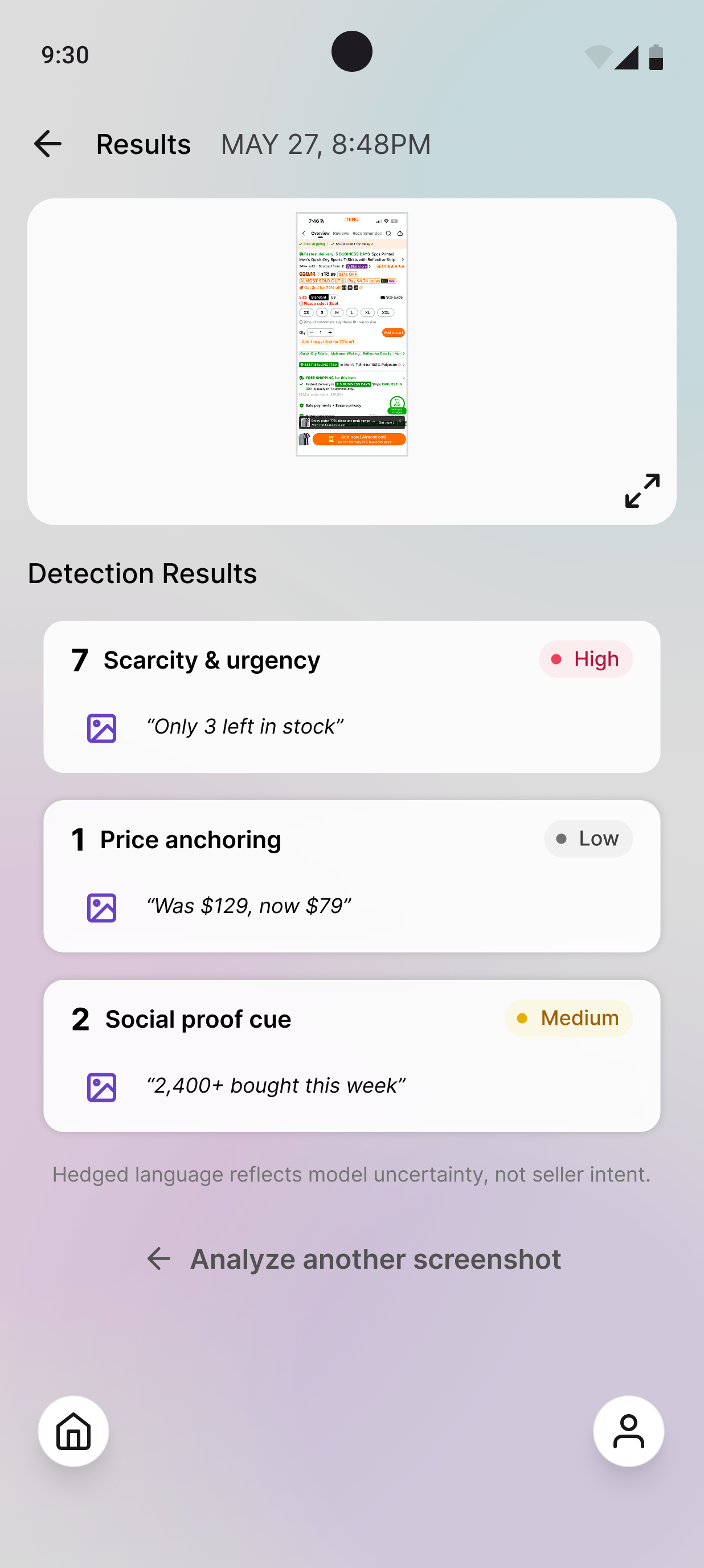
ClarityOS analyzes what users see while shopping and identifies persuasive design patterns in real time. It explains those tactics in simple, neutral language, giving shoppers additional context at the moment of decision so they can evaluate purchases more intentionally.
v0
The first version combines lightweight passive auto-detection with an on-demand screenshot analysis flow. ClarityOS can surface persuasive tactics as users shop, while also letting them manually analyze a screen for more detail. The focus is on validating detection accuracy, severity, and explanation quality without introducing historical tracking yet.
Preview prototype ->Future
The longer-term experience expands passive detection into a more continuous shopping copilot. It introduces historical information so users can see patterns over time, review previously detected tactics, and better understand how often different forms of persuasion appear across their shopping experiences.
Preview prototype© 2026 Mary Ann Saulong Lewis. ClarityOS concept, design, and prototype. All rights reserved.
My Role
Solo Product Designer & Builder
I’m taking ClarityOS from early product framing through interaction design, prototyping, technical exploration, and implementation. I’m defining the product experience while using AI-assisted development to validate the concept as a functional Android experience.
Workflow
Frame the problem
Define the persuasive patterns ClarityOS should recognize, where they appear in the shopping journey, and when intervention would be most useful.
Tools: ChatGPT, ClaudeDesign the experience
Explore the mobile interaction model, information hierarchy, detection states, and how explanations should appear without disrupting the shopping experience.
Tools: Figma, Figma Make, ChatGPTDefine the detection model
Translate patterns like false scarcity, urgency, price anchoring, and social proof into signals that rules and AI can evaluate consistently.
Tools: ChatGPT, ClaudePrototype and build
Turn interaction concepts into a functional Android prototype while exploring technical feasibility, architecture, and implementation tradeoffs.
Tools: Claude Code, VS Code, Android development tools, Google AntigravityTest against real experiences
Evaluate ClarityOS against real e-commerce experiences to identify false positives, missed patterns, and explanations that may be unclear or overly confident. Where appropriate, compare detections against manually reviewed examples to improve consistency.
Tools: ChatGPT, Claude, Android testing toolsIterate across design + build
Use findings from testing to refine the UX, prompts, detection logic, and implementation, moving continuously between design and development.
Tools: Figma, ChatGPT, Claude, Claude Code
What I’m Testing
Because ClarityOS is still in progress, the focus is currently on validating the core experience rather than measuring final product outcomes. I’m testing whether persuasive patterns can be detected reliably, whether explanations are clear and neutral, and whether the experience provides useful context without interrupting the shopping journey.